
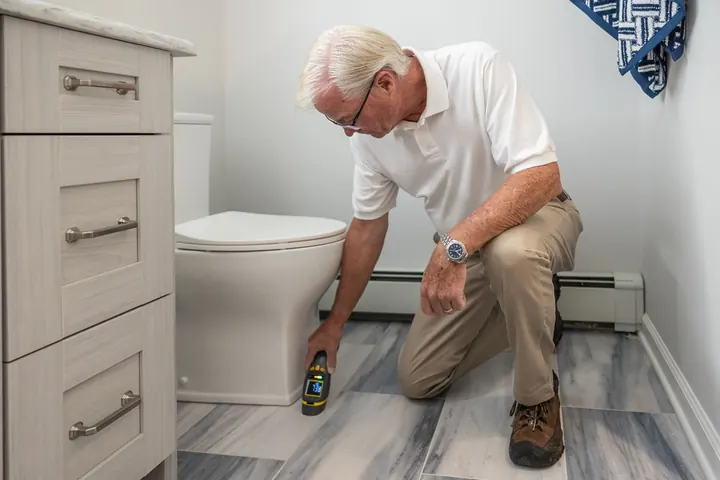
 Non Invasive
Hidden Water Leak Detection
Musty smells, soft floors or a bill that keeps climbing with nothing visible. We find concealed leaks inside walls, floors and cabinets without tearing things apart.
Explore This Service
Ceiling & Wall Leak Detection in Texas
A water stain tells you something is wrong, not where it is coming from. Water travels along joists and pipes before it shows, so we trace the stain back to its true source.
Water rarely appears directly below its source. It runs along ceiling joists, top plates, pipes and wires, then soaks through wherever the drywall is weakest. A stain in the dining room can come from a shower valve in the bathroom above and one room over.
That is why cutting open the ceiling under the stain often finds wet insulation but no leak. Tracing the water path first saves that guesswork.
The timing tells you a lot. A stain that grows after storms and stays dry otherwise points to the roof, flashing or a window. A stain that grows on dry days, after showers or when the AC is running points to plumbing or a condensate line. A water meter that moves with all fixtures off confirms a supply leak.
We check all three possibilities so you call the right trade first.
Think you have this kind of leak? A specialist can talk you through it right now.
Call NowMoisture meters map the wet area and show which direction the water is coming from. Thermal imaging follows the cooler, wetter path across the ceiling or up the wall. We then test the likely sources: running the upstairs shower and tub separately, checking the toilet and supply valves, pressure testing the lines in that wall, and inspecting the AC drain.
When the source is confirmed, we mark the access point so the repair opening is as small as possible and in the right place.
If water is dripping or the ceiling is sagging, place a bucket under it, move belongings out of the way and, if safe, poke a small hole at the lowest point of the bulge to let water drain in a controlled way. Turn off the main water supply if you suspect a plumbing line, and switch off power to light fixtures in the wet area. Then call our 24/7 line.
Detection methods
No single tool finds every leak. The specialist chooses the method by the type of pipe, where it runs and how loud the leak is.
Pin and pinless moisture meters measure how wet drywall, wood, subfloor and insulation really are. Mapping the readings shows where the water is spreading from and confirms when materials have dried after the repair.
An infrared camera shows temperature differences on floors, walls and ceilings. A leaking hot water line leaves a warm bloom, and evaporating water from a cold line shows as a cool patch, so the camera narrows the search area without touching the surface.
Each section of plumbing is isolated and held under pressure on a calibrated gauge. If the reading drops, that section is leaking. Testing hot, cold, supply and irrigation lines one at a time tells you exactly which system has the problem before anyone looks for the spot.

Why Texas Leak Detection Experts
Most plumbers can fix a pipe. Fewer can tell you exactly where an invisible leak is without opening walls, floors or the yard. Leak detection is that one job, done with the right equipment and a methodical process, so the repair is small and done once.
Lines are isolated and tested so the search covers one run, not the whole property.
Acoustic, thermal, moisture and tracer gas tools find the leak before anything is opened.
You hear where the leak is, what likely caused it and your repair options in plain language.
Shoe covers, careful access and a tidy work area every visit.
How it works
Step 01
Tell us what you are seeing. We help you shut off water if needed and confirm availability and pricing on the call.
Step 02
The specialist confirms the leak, isolates each line and uses acoustic, thermal or tracer gas tools to find the exact spot.
Step 03
The leak is marked, the cause explained and repair options laid out, so you decide what happens next.
Related services
Leaks do not always stay in one category. These services often go hand in hand with this one.
Non InvasiveMusty smells, soft floors or a bill that keeps climbing with nothing visible. We find concealed leaks inside walls, floors and cabinets without tearing things apart.
Explore This Service 24/7 Emergency
Running water sound, a meter that will not stop or damp spots with no clear source. We trace the plumbing leak to one spot before anything is opened.
Explore This Service Business & Property
Offices, retail, restaurants, warehouses and apartment communities. We find leaks with minimal disruption to tenants and trading hours.
Explore This ServiceWhere we work
We provide ceiling & wall leak detection in 696 Texas cities and communities. Popular areas include:
What to expect
Every call follows the same simple standard, wherever you are in the state.
You hear where the leak is, what most likely caused it and what the repair options are, in plain language and before any work is agreed.
How pricing works is explained on the phone before anyone is sent, so there are no surprises when the specialist arrives.
Lines are tested and the leak pinpointed with acoustic, thermal or tracer gas equipment, so any opening is small and in the right place.
Gallery



FAQ
Common questions about ceiling & wall leak detection in Texas.
Talk to a real leak specialist, not a sales script. Advice over the phone is free.
(800) 901 7671Watch when it changes. Stains that grow only after rain usually come from the roof, flashing or windows. Stains that grow on dry days, after someone showers or while the AC runs point to plumbing or a condensate line. A water meter that moves with everything off confirms a supply leak.
We map moisture across the wall with meters, scan it with a thermal camera to follow the wet path, and test the pipes and fixtures in that wall one at a time. Acoustic equipment can then confirm a pressurized leak. This locates the source before any drywall is opened.
A dry stain that is not growing can wait a short time, but it still needs checking. A stain that is spreading, dripping or sagging is urgent, because the drywall can fail and the water may be reaching wiring. Shut off the water and call for help right away.
Yes. In Texas homes with attic air handlers, a clogged condensate drain or a cracked drain pan is one of the most common causes of ceiling stains, especially during long summer cooling seasons. We check the condensate system as part of tracing a ceiling leak.
That usually points to the shower valve, the shower head arm, the drain assembly or failed grout and caulk. If the leak appears only while water drains, the drain is more likely. If it appears whenever the valve is on, the supply side is more likely.
A small access opening is often needed to make the repair, but detection is done first so that opening is placed precisely. That avoids several exploratory holes and keeps patching to a minimum.
Don't see your leak listed? If it involves water going where it should not, we can help you find it.
Talk To A SpecialistCall any time
One call to our 24/7 line gets a specialist working on your leak. Tell us what you are seeing and we will take it from there.