
 24/7 Emergency
Water Leak Detection
Running water sound, a meter that will not stop or damp spots with no clear source. We trace the plumbing leak to one spot before anything is opened.
Explore This Service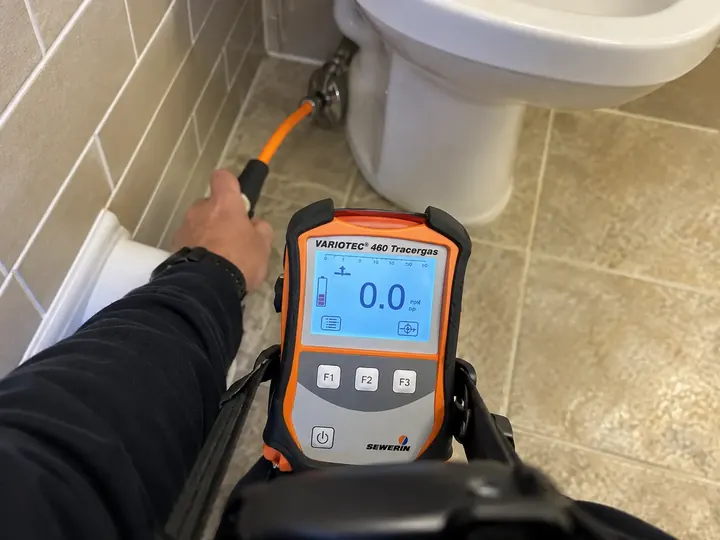
Slab Leak Detection in Texas
Most Texas homes sit on a concrete slab with water lines running underneath. When one of those lines leaks, we find the exact spot from above so the concrete is opened once, in the right place.
A slab leak is a leak in a water line that runs beneath or inside a concrete foundation. In most Texas homes built since the 1950s, the main supply and branch lines were laid in the soil under the slab before the concrete was poured. When one of those pipes fails, the water escapes into the soil and the concrete above it.
Slab leaks can be on the hot side or the cold side. A hot water slab leak often makes the water heater run constantly and creates a warm area on the floor. A cold water leak is quieter and often shows first as a higher bill or a moving meter.
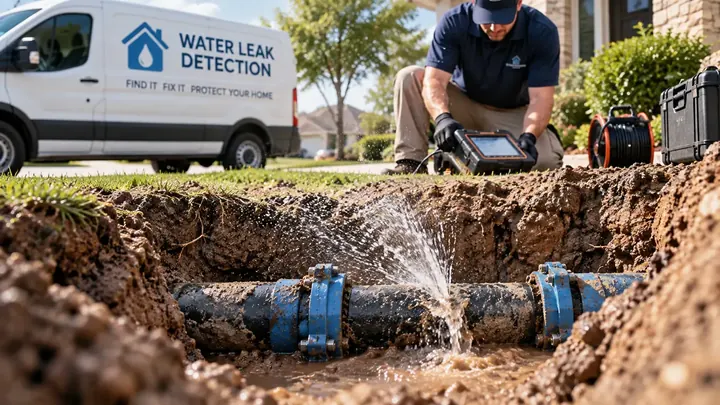
Texas has some of the most expansive soil in the country. The official state soil, Houston Black clay, and similar clays across the Blackland Prairie and Gulf Coast swell when wet and shrink during drought. That constant movement flexes foundations and the pipes beneath them.
Add hard water that thins copper from the inside, pipes that rub against concrete or gravel as the slab moves, and decades of thermal expansion on hot water lines, and pinhole leaks under the slab become a regular problem across the state.
Think you have this kind of leak? A specialist can talk you through it right now.
Call NowFirst we confirm the leak and isolate it. Separating the hot side from the cold side and testing each line under pressure tells us which line is leaking, so we never search the whole slab.
Next we trace that line's route through the slab with a pipe locator. Thermal imaging shows heat patterns from hot water leaks on the floor surface. Acoustic ground microphones then listen along the line for the point where the sound is strongest. If the leak is too quiet to hear, tracer gas finds it.
The exact spot is marked on the floor so a repair can go straight to it.
The right choice depends on the age of the plumbing, the leak location and what flooring sits on top. You get a clear explanation of each option before any work begins.
Detection methods
No single tool finds every leak. The specialist chooses the method by the type of pipe, where it runs and how loud the leak is.
Water escaping a pressurized pipe makes a hiss that travels through the pipe, the slab and the soil. Ground microphones and electronic listening equipment amplify that sound so the specialist can follow it to the loudest point, which is usually the leak.
An infrared camera shows temperature differences on floors, walls and ceilings. A leaking hot water line leaves a warm bloom, and evaporating water from a cold line shows as a cool patch, so the camera narrows the search area without touching the surface.
When a leak is too quiet to hear, the line is drained and filled with a safe hydrogen and nitrogen mix. The gas escapes through the smallest crack and rises through concrete or soil, where a sensitive detector picks it up at the surface.
Each section of plumbing is isolated and held under pressure on a calibrated gauge. If the reading drops, that section is leaking. Testing hot, cold, supply and irrigation lines one at a time tells you exactly which system has the problem before anyone looks for the spot.
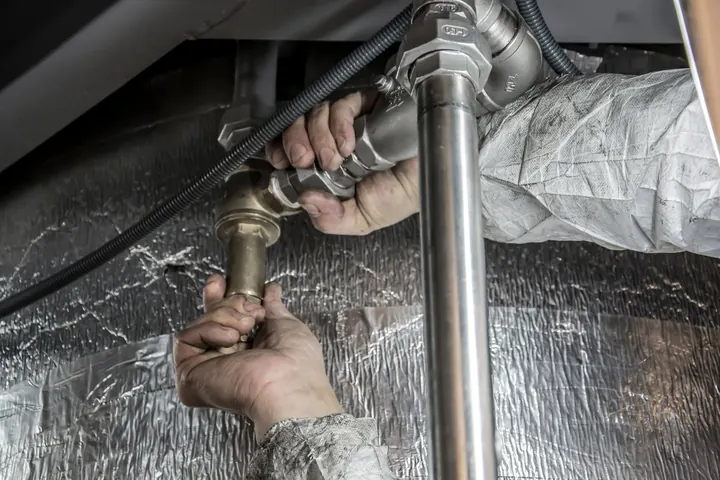
Why Texas Leak Detection Experts
Most plumbers can fix a pipe. Fewer can tell you exactly where an invisible leak is without opening walls, floors or the yard. Leak detection is that one job, done with the right equipment and a methodical process, so the repair is small and done once.
Lines are isolated and tested so the search covers one run, not the whole property.
Acoustic, thermal, moisture and tracer gas tools find the leak before anything is opened.
You hear where the leak is, what likely caused it and your repair options in plain language.
Shoe covers, careful access and a tidy work area every visit.
How it works
Step 01
Tell us what you are seeing. We help you shut off water if needed and confirm availability and pricing on the call.
Step 02
The specialist confirms the leak, isolates each line and uses acoustic, thermal or tracer gas tools to find the exact spot.
Step 03
The leak is marked, the cause explained and repair options laid out, so you decide what happens next.
Related services
Leaks do not always stay in one category. These services often go hand in hand with this one.
24/7 EmergencyRunning water sound, a meter that will not stop or damp spots with no clear source. We trace the plumbing leak to one spot before anything is opened.
Explore This Service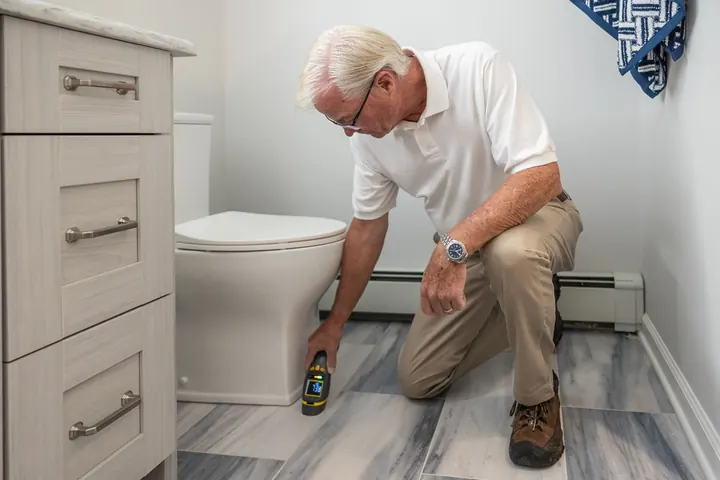 Non Invasive
Musty smells, soft floors or a bill that keeps climbing with nothing visible. We find concealed leaks inside walls, floors and cabinets without tearing things apart.
Explore This Service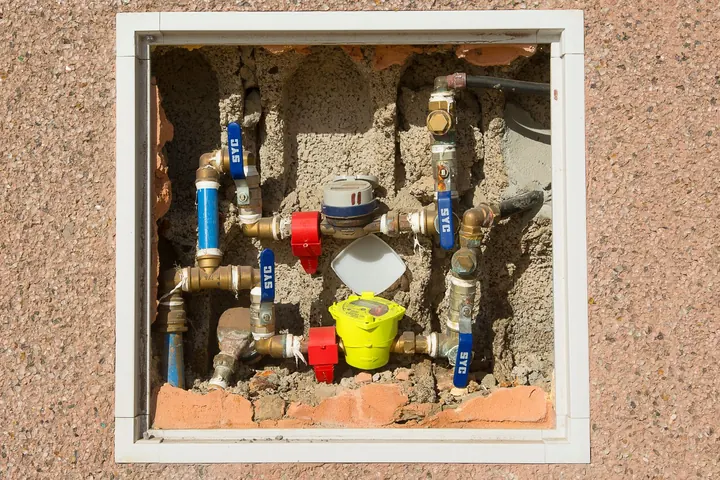 High Bill?
A bill that doubled or a meter dial that keeps turning. We investigate unexplained water use and find where the water is going.
Explore This ServiceWhere we work
We provide slab leak detection in 696 Texas cities and communities. Popular areas include:
What to expect
Every call follows the same simple standard, wherever you are in the state.
You hear where the leak is, what most likely caused it and what the repair options are, in plain language and before any work is agreed.
How pricing works is explained on the phone before anyone is sent, so there are no surprises when the specialist arrives.
Lines are tested and the leak pinpointed with acoustic, thermal or tracer gas equipment, so any opening is small and in the right place.
Gallery


FAQ
Common questions about slab leak detection in Texas.
Talk to a real leak specialist, not a sales script. Advice over the phone is free.
(800) 901 7671The common signs are a warm spot on the floor, the sound of running water beneath the house, a water heater that runs constantly, damp or musty flooring, new cracks in tile or walls, and a water meter that moves when nothing is on. Any one of these is worth checking.
Large parts of Texas sit on expansive clay that swells when wet and shrinks in drought, which moves foundations and the pipes under them. Hard water that wears copper from the inside and pipes rubbing against concrete as the slab shifts also contribute to pinhole leaks.
We isolate and pressure test each line to find which one is leaking, trace its route under the slab, scan the floor with a thermal camera and listen with acoustic ground microphones. Tracer gas is used for very quiet leaks. Only the marked spot is opened for the repair.
A single leak in otherwise sound pipe is often a good candidate for a spot repair. If the pipes are old, have leaked before or the leak sits under expensive flooring, rerouting the line through the walls or attic can be the better long term choice.
Many Texas policies cover the cost of accessing the leak and repairing resulting water damage, while excluding the pipe itself or long term seepage. Check your policy wording. A documented leak location and cause makes the claim conversation easier.
Water leaking under a slab can soften or wash out soil and, in expansive clay, make it swell unevenly. Over time that can contribute to foundation movement and cracks. Finding and stopping the leak early limits that risk.
Don't see your leak listed? If it involves water going where it should not, we can help you find it.
Talk To A SpecialistCall any time
One call to our 24/7 line gets a specialist working on your leak. Tell us what you are seeing and we will take it from there.